Table of Contents
You can use this page type to add a table from your base to your app.
Change page settings
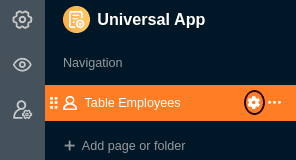
If you want to change the settings of a page, click on the corresponding cogwheel symbol in the navigation bar.
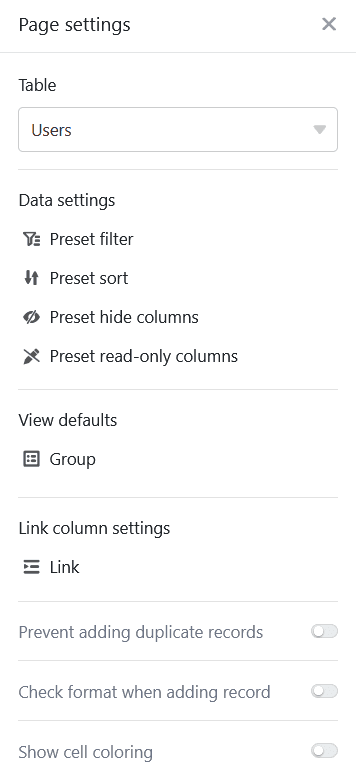
When editing table pages, you can make numerous page settings to tailor the displayed data from the underlying table precisely to a user group.
Preset filters, sorting and grouping
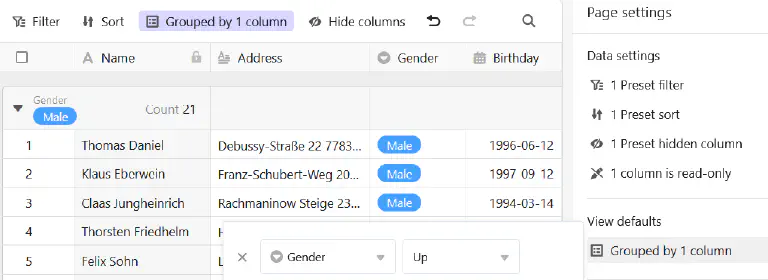
You can define preset filters, sorting and grouping in the page settings to limit and organize the displayed data for a user group.
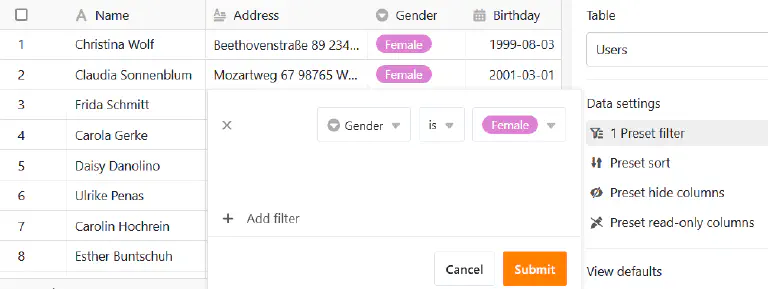
To do this, click on Add filter, Add sort or Add group, select the desired column and condition and confirm with Submit.
Hidden and read-only columns
In addition to the preset filters, you can also define hidden and read-only columns to further restrict the visibility and editability of certain data.
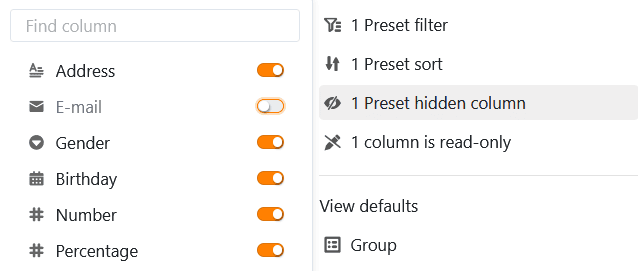
Simply click on the sliders or boxes of the columns that should be hidden or read-only for the users.
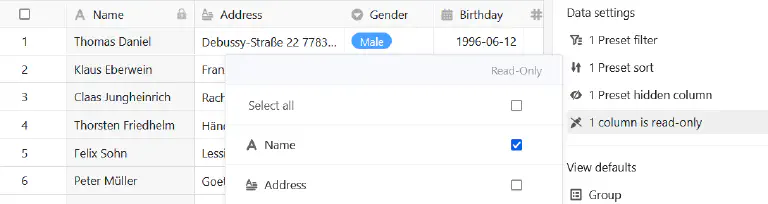
You can recognize read-only columns by the fact that they are highlighted in grey in the table and marked with a lock symbol.
View options of the user
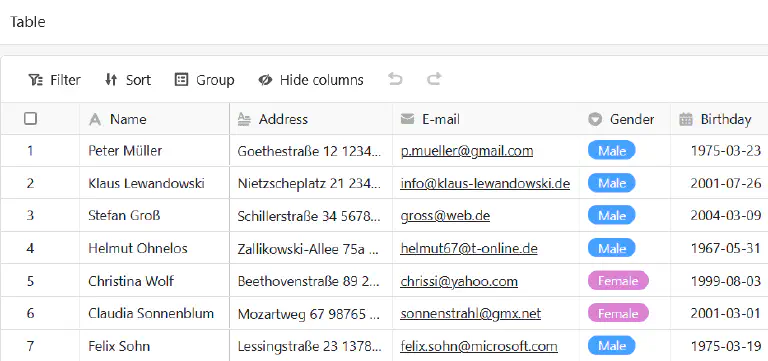
With the view options above the table, app users can make their own additional settings, which work in exactly the same way as in the base. These include
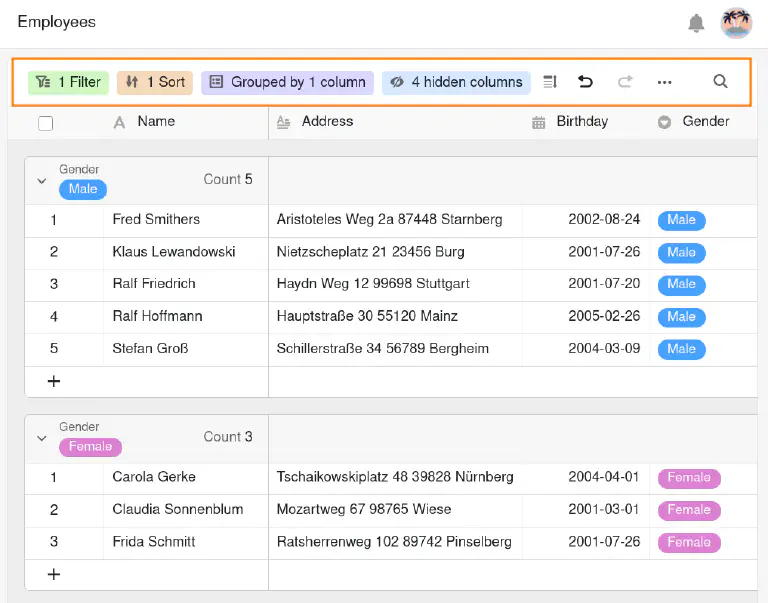
As mentioned above, the user’s individual view settings have no effect on the standard settings you have predefined for the table page. For example, the user can hide additional columns or additionally filter a view that you have pre-filtered, but they cannot display any rows that you have filtered out or columns that you have hidden or even make them visible to others.
Link column settings
In the settings for the link column, you can define for each linked table which data is visible and editable and which operations are permitted. Depending on the configuration, users may create new records in the linked table as well as link, modify and remove existing records. This allows you to control the respective permissions precisely.
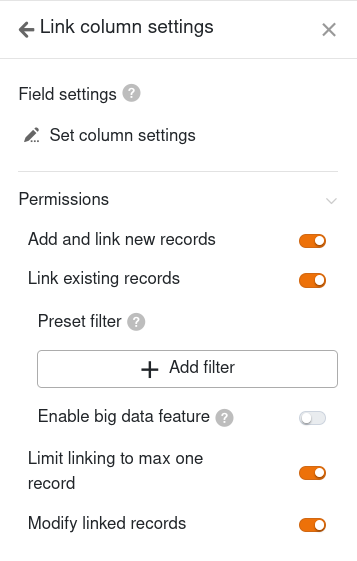
- Column settings for the linked table: Here you can define exactly to what extent the following authorizations apply to specific columns.
- Create and link new records: If you activate this slider, users can add new entries to the linked table. You can use the column settings to define which columns are visible and which columns are required, i.e. must be filled in.
- Link existing records: If you activate this slider, users can link existing entries in the linked table. You can use the column settings to define which columns are visible.
- Preset filters: If you add a filter here, only options that fulfill the filter conditions will be displayed when linking entries.
- Enable big data feature: If the big data function is activated, users can search through more than 20,000 data records, provided there are this many entries in the linked table.
- Modify linked records: If you activate this slider, users can edit existing records in the linked table. You can use the column settings to define which columns are editable.
- Remove existing records: This authorization lets you specify whether users are allowed to delete existing links.
- Limit links to a maximum of one row: If you activate this slider, users can only link to one row of the linked table in the cells of the link column.
Prevent duplicates from being added
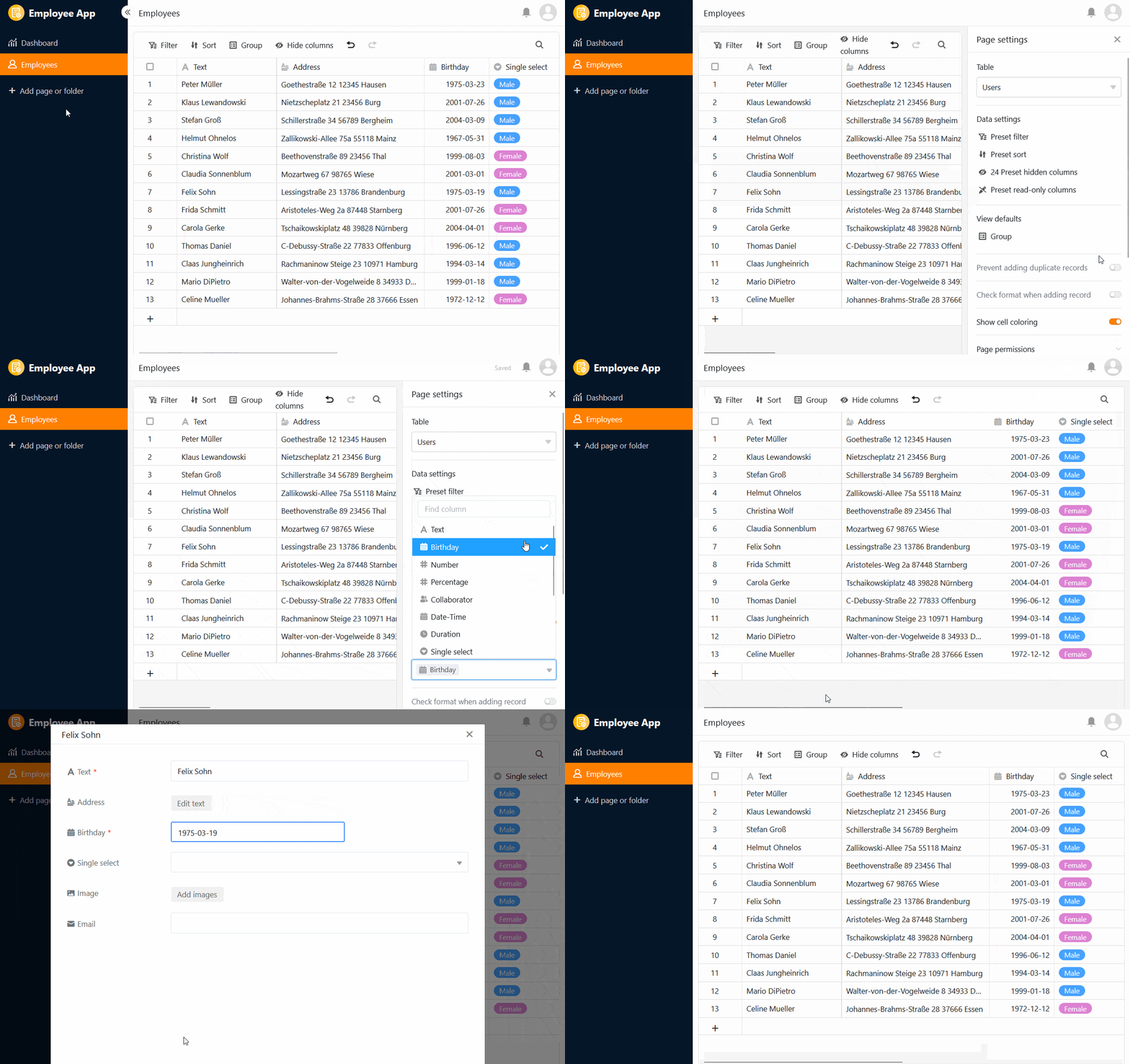
On table pages where different users can make new entries in a base, it is easy for identical rows to be created. You can prevent this by preventing duplicates from being added. To do this, activate the corresponding slider and select the columns in which the values must match for an row to be considered a duplicate. If the addition of an row is blocked, a corresponding error message appears.
Format check for new entries
You can activate another slider to validate entries in text columns. As soon as the format check is switched on, the row details always open when someone wants to add a new entry to the table page - and this is only possible if the entries correspond to the defined format. An error message appears for entries with a different format.
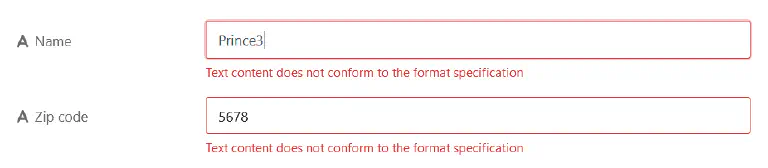
For example, you can minimize typing errors for clearly defined character strings such as zip codes or account numbers. You define the regular expressions for validating the entries when you create a text column in the base.
Show cell formatting
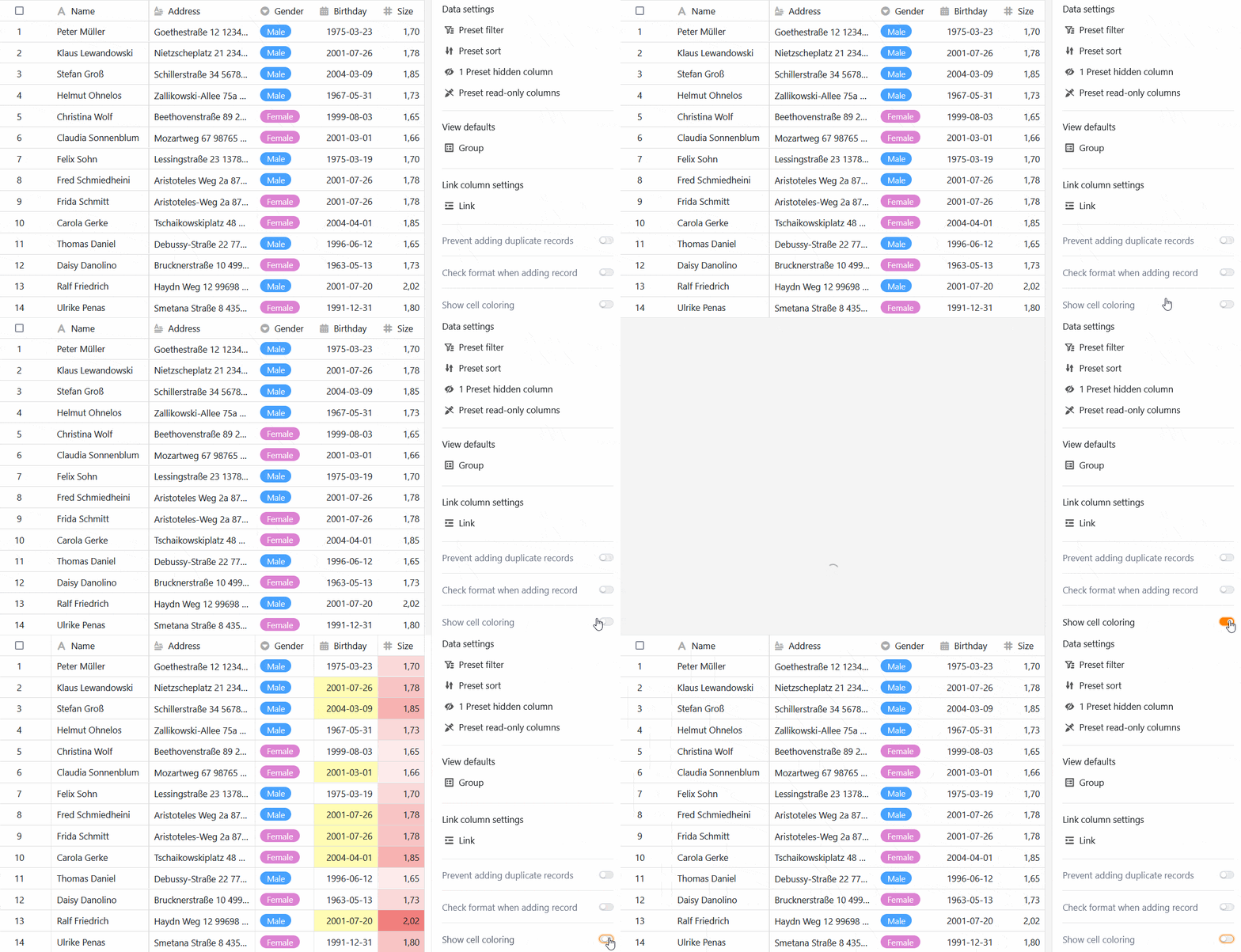
If you use the coloring of cells in the underlying table, you can activate the option to display the cell formatting on the table page with one click.
Export table page as Excel file
This function is disabled by default. If you want to enable Excel export, activate the corresponding slider in the table page settings. All app users who have access to the table page can then export the visible data as an Excel file. To do this, click on the three dots in the view options and then on Export to Excel.
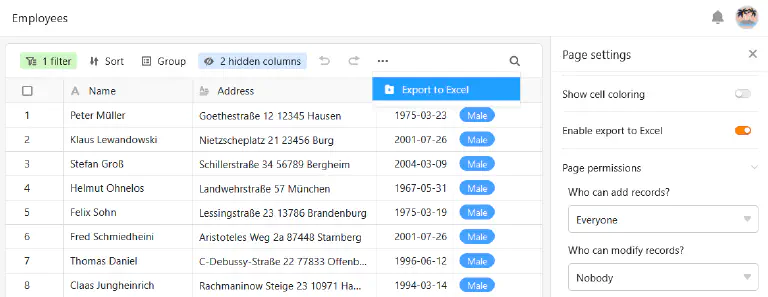
The data exported from the table page is independent of the current view. Even if you filter or hide columns, all data is included in the export.
Page authorizations
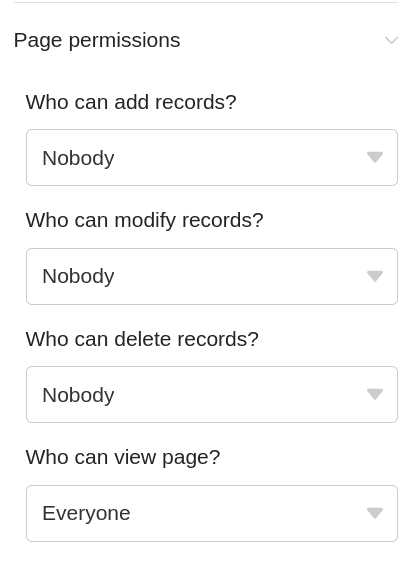
In the page authorizations, you can set exactly who is allowed to view and edit the table.