
The key fields of action of a smart city at a glance #
- Efficient municipal operations: Intelligently connect and centrally manage assets such as parking spaces, waste bins, and streetlights.
- Real-time infrastructure: Collect and analyze IoT sensor data to manage traffic, energy consumption, and environmental pollution according to the situation.
- Breaking down data silos: Bring municipal data streams together and create a reliable basis for urban planning and political decisions.
- Citizen-centered innovation: Encourage citizen participation and adapt proven smart city approaches from other cities and towns to local needs.
- Sovereign data management: Use self-hosted no-code systems to design digital processes and ensure interfaces, access control, and data security.
The transformation of urban spaces: Why cities have to reinvent themselves #
Cities around the world are under growing pressure to act, especially when resident and visitor numbers keep rising. Buildings, traffic, public spaces, and green areas compete for scarce public space; extreme weather events place greater demands on infrastructure; rising energy and operating costs strain budgets. At the same time, citizens expect an efficient administration, transparent decisions, and a high quality of life.
The current challenges facing modern municipal administrations #
Many of these problems are interconnected. In metropolitan areas, soil sealing and dense development cause the microclimate to heat up, fresh air corridors to disappear, and heavy rainfall to barely seep away. Slow-moving traffic and cars searching for parking not only increase travel times but also noise, exhaust, and pollutant emissions in inner cities that are already stifling. If municipalities do not manage street lighting, waste collection, or mobility services according to demand, they needlessly waste resources such as energy, working time, and money.

Because many municipal utilities and environmental, building, and transportation authorities work with different data and systems, there is often no shared view of the actual situation on the ground. It is therefore crucial to link existing data in a meaningful way and integrate cross-departmental digital solutions into urban planning. Whether parking management, heat protection, or municipal property management – with a central database, municipalities can make better-informed decisions and deploy resources in a more targeted way.
A summary of the biggest challenges for municipalities:
- Local quality of life: Housing and transportation routes for more and more people compete with public spaces and green areas, which are important for local recreation and the microclimate.
- Uncontrollable traffic volumes: A lack of real-time and historical data makes parking management, traffic light control, and traffic planning more difficult.
- Waste of resources: Rigid operating intervals (e.g. for lighting, waste collection, and irrigation) often take insufficient account of actual demand.
- Complex digitization: Elaborate technological changeovers and expensive purchases overwhelm smaller IT budgets and limited staff resources.
- Data fragmentation: Municipal utilities, departments, and authorities manage information in separate systems and have no shared overview.
This is exactly where a smart city comes in: It views the municipality as a connected ecosystem.
Smart city simply explained: What makes a city truly intelligent? #
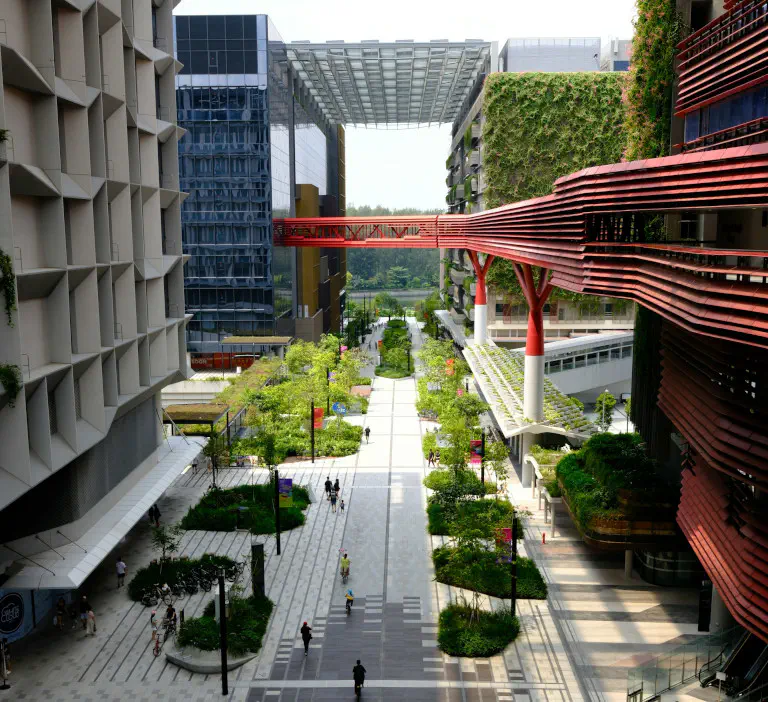
A smart city is an urban space in which digital technologies and intelligent data management help improve citizens’ quality of life through sustainability and efficient municipal operations. The digital transformation in municipalities does not only apply to traditional administrative services (keyword: digital citizens’ office), but also to the infrastructure for essential public services, such as mobility, energy supply, and buildings.
What are the goals of a smart city? #
- economical use of resources and energy efficiency
- local economy and employment
- diverse housing and leisure options
- sustainable urban development and improved quality of life
- attractive mobility solutions and active traffic management
- safety and cleanliness in public spaces
- protection against noise, heat, flooding, and environmental pollution
- social participation and accessibility
- less administrative work through digitization
What does a smart city concept consist of? #
A viable smart city concept comprises three levels:
- Smart city technologies: sensors, controllers, actuators, intelligent communication and power networks (smart grids), central data platforms
- Smart city data: data management that exchanges information via interfaces, consolidates it in a structured way, and makes it usable for urban planning and municipal operations
- Smart organization: clear responsibilities and workflows so that the shared data basis leads to well-founded decisions and measures
Smart city technologies working together: Internet of Things, edge computing, and no code #
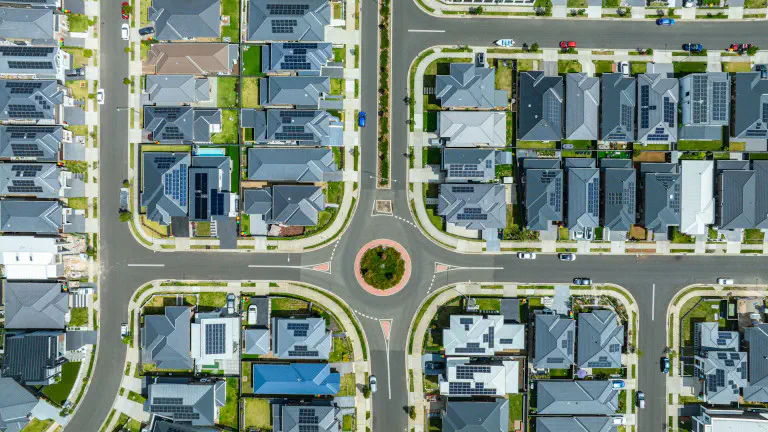
The Internet of Things (IoT) refers to the networking of objects and devices that use sensors, controllers, and actuators to collect and analyze certain data and carry out automated actions. This key technology of the smart city is also familiar from Industry 4.0 and the private smart home.
How do IoT sensors work? #
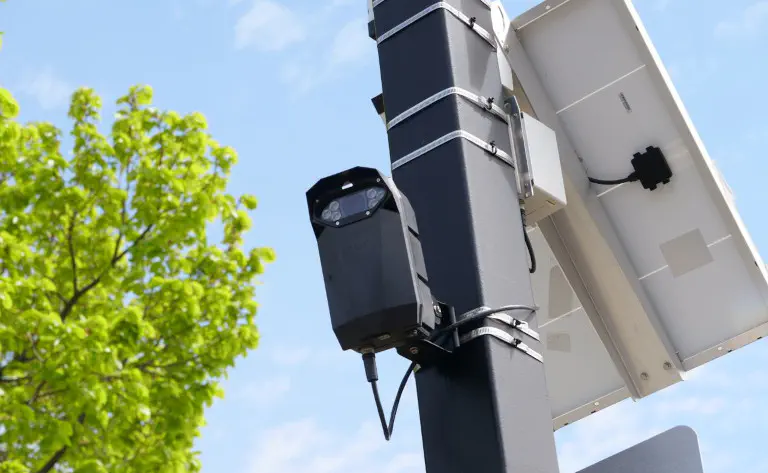
An IoT sensor is a measuring device that detects physical changes (e.g. temperature, humidity, air quality, noise, brightness, pressure, radio frequencies, or movement) in its environment, converts them into digital signals, and transmits these via a network to a central platform. The system can analyze the real-time data and trigger automatic actions to take countermeasures if necessary. The advantage: IoT sensors deliver live information without anyone having to be on site. This helps deploy resources according to demand and thus save energy, time, and costs.
What is edge computing? #
Edge computing refers to decentralized data processing via automated controllers directly at or near the source of the data, instead of forwarding the data to a data center or a cloud. The goal is to avoid unnecessary data streams and relieve networks by analyzing, filtering, and further processing data at least partly on the spot. This can contribute to lower costs, faster response times, and greater data security, as the data does not have to travel long transmission paths but remains in the local IT infrastructure.
What are no-code platforms used for? #
Networked sensors and automated controllers alone do not make the difference. An intelligent city also needs a central database in which the digital data and processes for planning and operations come together. This is where no-code platforms come into play. They are ideally suited for consolidating data streams and designing digital processes without having to rely on traditional programming. This allows you to promote citizen development in your smart city, enabling even less technically skilled people to develop their own customized solutions.
For a smart city to be able to process big data – that is, large volumes of data arriving quickly from different sources – data platforms must have certain capacities. For the administration, however, it is not necessarily the amount of data that matters, but its quality, context, and usability. An unusual environmental measurement, for example, only becomes meaningful once the location, time of measurement, and relevant influencing factors are known. Relational databases are particularly well suited to organizing and checking smart city data and linking it to its respective context.
Specific areas of application: When municipal operations become intelligent #
A parking garage in a smart city reports free parking spaces, waste bins transmit their fill levels, and measuring stations record environmental values such as temperature and air quality: The areas of application for smart city technologies are diverse and limitless. Let’s take a closer look at some smart city examples below.
Smart mobility: Real-time traffic control and the parking garage in a smart city #
Searching for a parking space causes additional traffic, takes time, and harms the environment. A parking garage in a smart city should therefore use automatic license plate recognition at the barrier to register vehicles as they enter and exit and calculate occupancy and fees. With parking occupancy data, digital parking guidance systems and intelligent traffic lights can optimize traffic flow in real time to shorten travel times and reduce emissions. Car-sharing services also make it possible to reserve available vehicles in designated parking spaces, which ideally also provide charging infrastructure.
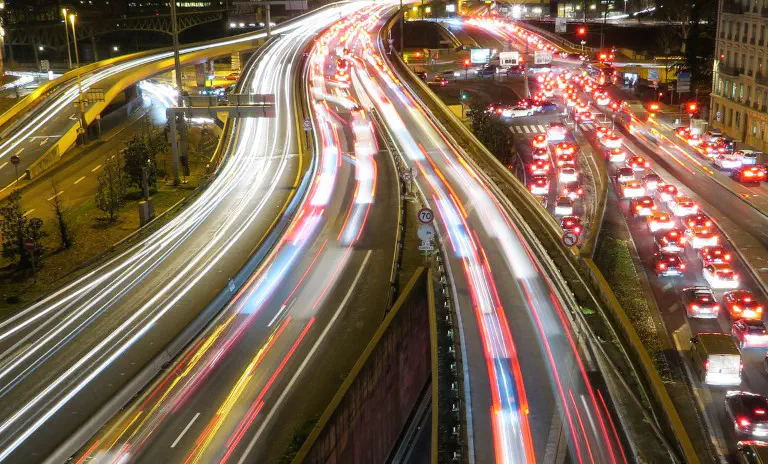
In public transit, real-time position data from buses and trains can pass on exact departure times and delays to digital display boards and apps. In addition, a comprehensive smart city concept takes traffic volumes over a longer period and across all modes of transportation into account. This allows traffic planning to rely on actual usage data in order to derive holistic measures such as the expansion of bike paths, underground parking, or local public transportation.
Efficient use of resources: Demand-based lighting and waste disposal #
Traditional municipal operations are often based on fixed schedules (e.g. lighting and emptying intervals). These are easy to manage, but do not reflect actual usage and current demand. For the lighting of streets, underpasses, and buildings, sensors can detect brightness and/or movement and support demand-based control. In waste disposal, fill level sensors provide information on which containers actually need to be emptied. With such data-driven municipal operations, unnecessary inspection trips can be reduced and resources deployed in a more targeted way.
Sustainable energy management in public buildings #
Schools, administrative buildings, and municipal properties often have high energy consumption, especially when they are older buildings. If rooms that are only used sporadically are permanently heated or cooled, this is particularly wasteful. Digital meters and sensors can first record energy indicators and reveal unusual load peaks, inefficient operating times, or differences between comparable buildings.
The building management system can then review automated settings, prioritize renovations, and push ahead with demand-based climate control (e.g. according to room occupancy schedules). Smart thermostats measure the temperature and automatically regulate the flow of heating or cooling to maintain a set room temperature. Since heating and air conditioning systems consume a lot of energy, measures for insulation, shading, and roof and facade greening should also be considered.

Smart city examples across Europe: What municipalities can learn #
The following smart city examples show that intelligent urban planning can work on very different scales. Not every municipality needs the same digital infrastructure for this. What matters are the local challenges, the available resources, and the openness to integrating modern solutions into municipal operations for the long term.
Pioneer Barcelona: How the metropolis optimizes traffic, lighting, and irrigation #
The smart city of Barcelona is a well-known international example of municipal digitization. Various initiatives address intelligent mobility, digital infrastructure, and the more efficient use of municipal resources. Three examples:
- Superblocks: Several city blocks are combined and the streets between them closed to through traffic. The conversion in favor of people and nature makes the space more pleasant to spend time in, while traffic is diverted to main roads, bike paths, and public transit.
- Solar Hubs: Digitally connected, solar-powered streetlights packed with sensors are distributed throughout Barcelona. They measure important environmental data such as temperature, air quality, and noise while also providing efficient lighting.
- Optimized irrigation: Probes installed underground continuously measure the moisture, temperature, and salinity of the soil. Depending on current weather forecasts and the needs of the plants, the irrigation valves open or close fully automatically. In this way, the IoT network reduces water consumption in urban green spaces.

Smart city Etteln: Green electricity, fiber optics, and a village app #
In 2024, the German municipality of Etteln won the title of best smart city in the world – ahead of metropolises such as Hong Kong. Yet the village of 1,800 people near Paderborn is more of a smart village. Here are the key points from the smart city concept of the Westphalian community:
- Village app and smart mobility: Via the village app, residents can reserve an electric car-sharing van or arrange a ride at short notice. The app also includes a digital marketplace for buying and selling, news from the municipal administration, and invitations to events in the village.
- Fiber optics and networked sensors: Every resident of the municipality has a fiber-optic connection for fast internet. Sensors record weather data, stream water levels, the fill levels of used clothing containers, and other data, which can be accessed digitally on a dashboard and provide early warning of extreme weather events such as flooding.
- Green electricity and sovereignty: Etteln produces 34 times more electricity from renewable energy than it consumes itself. A wind turbine supplies the local data center with electricity, and a battery storage system also ensures independence from external providers and significantly lower prices.
Further inspiration from Vienna and Copenhagen #
When it comes to the most livable and intelligent cities in the world, Vienna and Copenhagen also consistently achieve top rankings. The focus is on climate neutrality, smart energy supply, and sustainable mobility. Vienna operates one of the largest district heating and cooling networks in Europe, which connects apartments, public buildings, hotels, and industry in terms of energy. Another flagship project is Vienna’s main wastewater treatment plant, which generates more energy from sewage sludge than it needs to treat wastewater. A similar success story is the famous CopenHill combined heat and power plant, which feeds energy from waste into Copenhagen’s district heating system.
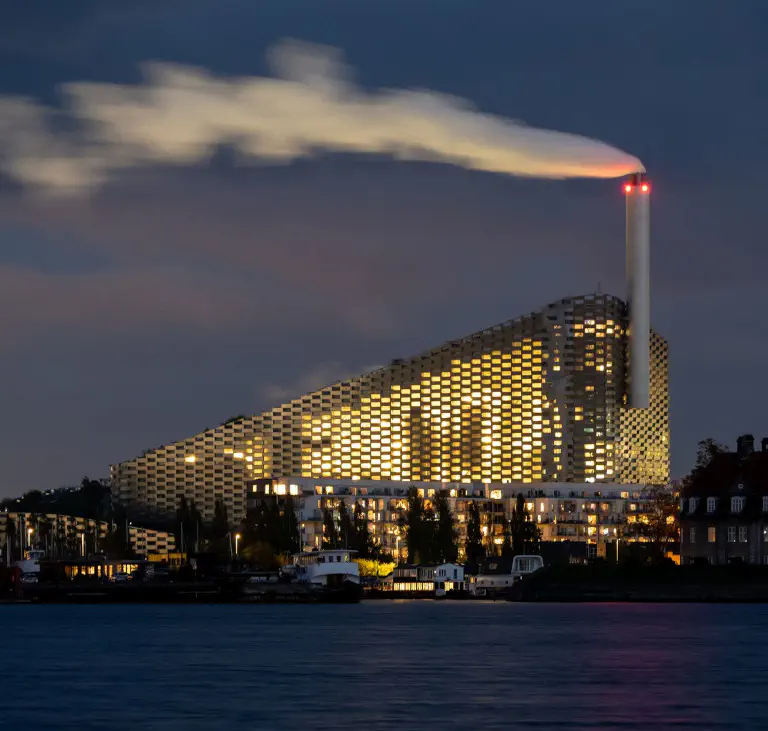
Copenhagen’s smart city concept also envisages that people in the Danish capital can travel three quarters of all journeys by bike, by public transportation, or on foot. There is already a network of devices and traffic lights on the streets to monitor traffic and control it if necessary. Intelligent lamps, for example, can increase their brightness in the dark when a sensor detects the movement of a person nearby. This improves road safety and saves a lot of energy for public lighting.
Protecting smart city data and managing it in a structured way #
Collecting extensive smart city data must not lead to unnecessary surveillance of citizens. Information about traffic or visitor volumes in the city, for example, must be anonymized and unsuitable for identifying individual vehicles or people. Anyone submitting digital applications to the citizens’ office must also know that their data is safe. It is therefore essential that an intelligent city retains control over its data and how it is used.
In everyday practice, the building department, environmental agency, municipal utilities, and transportation and waste disposal companies often work with their own isolated data sets. This has evolved historically and is often appropriate for individual tasks. For cross-departmental decisions, however, it becomes an obstacle. Many municipalities do not fail because of a lack of sensors and data collection technologies, but because of the lack of connections between existing systems. Data is scattered across paper files, Excel spreadsheets, office documents, and specialized software. This results in media breaks, redundant data storage, and differing versions.
A smart city therefore needs a shared data platform that breaks down information silos, integrates existing specialist systems, and links data in a meaningful way. In this way, a collection of isolated digital solutions becomes coordinated management of smart city data.
SeaTable – the central no-code database in the smart city #
In a smart city, SeaTable acts as a central database system that links individual sensor signals, traffic data, and administrative processes in one GDPR-compliant platform. The AI no-code platform makes it possible to put together data structures, forms, applications, and automated workflows with just a few clicks, without traditional programming. This allows departments – within a clearly defined IT and no-code governance framework – to test new digital workflows more quickly and develop them further themselves.
The advantages of SeaTable for the smart city #
- Integration: SeaTable can receive data from sensors and external systems via API interfaces, import Excel and CSV files, and manage office documents.
- Data management and visualization: Using views and apps, you can filter, structure, statistically process, and clearly present the data.
- AI automations: Based on defined rules, SeaTable can trigger automated actions so that standardized processes run on their own or AI takes over certain tasks.
- Data protection: In SeaTable, you can manage access rights, retention periods, and the processing of personal data in a GDPR-compliant way.
- Availability: All data is stored centrally and can be found by authorized persons at any time using search functions – from anywhere in the world and around the clock.
- Scalability: Start with individual projects and gradually bring in other departments. SeaTable is highly scalable and grows with your requirements.
Possible use cases for SeaTable in the smart city #
- Infrastructure management: You can record public waste bins, lighting, green spaces, or other assets with their location, condition, and maintenance history in an inventory list.
- Environmental monitoring: Sensors deliver measured values that you can document and analyze in SeaTable in order to determine necessary measures if limit values are exceeded.
- Municipal property management: With a central database, you can coordinate the use, rental, and renovation of public buildings as well as their energy management.
- Municipal project management: With SeaTable’s project portfolio, you can make measures, responsibilities, progress, costs, and key figures visible across departments.
- Traffic planning: Based on traffic data, private motorized transport can be managed with parking fees, resident parking permits, guidance systems, and alternative mobility services.
- Fleet management: With SeaTable, you can manage your municipal vehicle fleet, e.g. electric cars for car sharing, tow trucks and garbage trucks, or special vehicles such as street sweepers and gritters.
Enjoy the convenience of SeaTable Cloud, which stores and processes data exclusively in German data centers, or retain full data sovereignty by installing and operating SeaTable Server on your own municipal infrastructure.
Conclusion: Putting ideas for the city of the future into practice #
Successful municipal digitization does not begin with as many sensors as possible, but with a smart city concept. What are your goals? Less traffic searching for parking, more efficient waste disposal, more economical energy consumption, or better collaboration between authorities? Only once the vision is clear should you start launching suitable projects. The power of the smart city comes from the interplay of technology, data, and organization. A flexible no-code platform can help you consolidate different data sources, make sound decisions, and design automated processes.
Frequently asked questions about smart cities #
What is a smart city?
What role do IoT sensors and data play in an intelligent city?
How can data chaos be avoided in a smart city?
Can smaller municipalities and villages also implement a smart city concept?
How does a smart city protect sensitive citizen and infrastructure data?
TAGS: Public Sector Integrations & Automations Data Management & Visualisation