
The Biggest Challenges of Parking Management at a Glance #
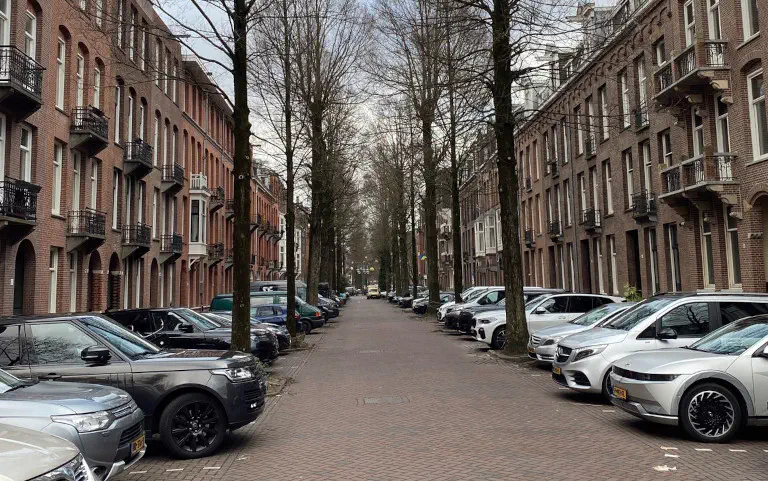
- Rising vehicle density: More and more households own several cars – and larger models such as SUVs on top of that – which pushes parking capacity in densely populated residential areas beyond its limits.
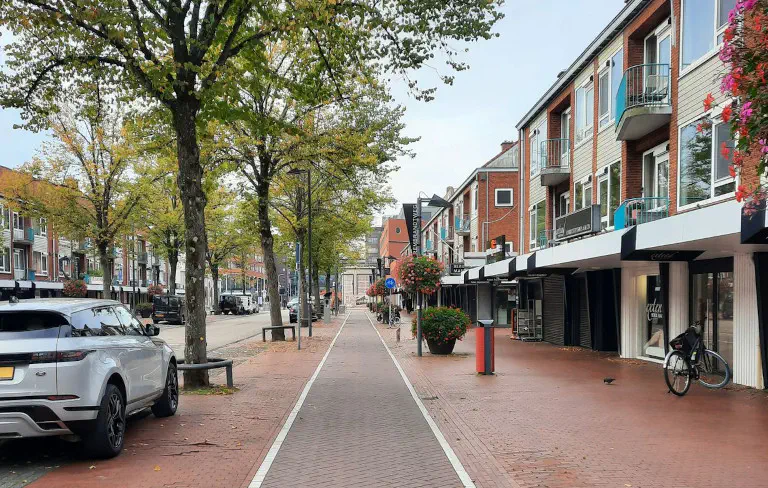
- Battle for the curb: On-street parking spaces are disappearing in favor of cycling infrastructure, sidewalks, green spaces, and outdoor dining, which further exacerbates the shortage.
- The catch with resident parking: A resident parking permit usually entitles the holder to park in certain resident parking zones, but it does not guarantee a free space.
- Non-resident parkers and parking costs: High fees for parking garages and public parking lots drive non-residents into residential areas, overloading them.
- Frustration and cruising for parking: Many residents cannot find a space in their neighborhood and generate frustrating search traffic.
- Illegal parking and congestion: Too many cars, and cars parked illegally, obstruct the flow of traffic and often clog up city streets.
- High administrative burden: Manual checks of parking permits, tickets, and special authorizations can overwhelm public order offices.
What Exactly Does Parking Management Mean? #
The task of parking management is to regulate the demand for public parking when supply is limited. This can be achieved through measures such as resident parking, parking fees, or limits on parking duration. Parking space management is part of the broader field of parking management and deals primarily with vehicles parked in public areas. In general, a distinction is made between on-street and off-street parking:
- On-street parking covers all parking spaces that are freely accessible on public roads and areas.
- Off-street parking refers to parking areas that are separated from general road traffic, for example by barriers or gates.
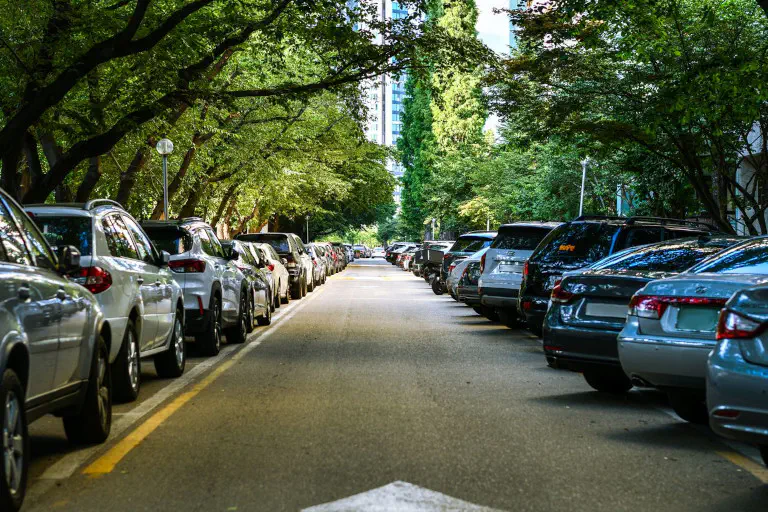
Fewer Engines, More Quality of Life: Goals of Parking Management #
Few topics in local politics are as controversial as parking management. When it comes to using limited public space as efficiently, fairly, and sensibly as possible from a transport policy perspective, opinions quickly diverge. Depending on the political will, parking management can pursue different goals:
- providing enough parking for businesses and residents in city centers
- maximizing revenue from parking fees and fines
- reducing private motorized transport as well as noise and environmental pollution
- increasing the attractiveness of public transit
- redesigning parking areas in favor of sustainable mobility (e.g., EV charging stations)
- improving quality of life through traffic calming, greening, or play areas
Battle for the Curb: Conflicts of Interest in Parking Management #
The curb has long been more than just the boundary between the road and the sidewalk. It marks one of the most hotly contested spaces in urban areas. Whether cyclists, pedestrians, public transit, delivery traffic, charging infrastructure, green spaces, outdoor dining, or cars – they all compete for the precious square meters at the roadside. At the same time, residents, businesses, and visitors expect good access to buildings.
This is exactly where parking management comes in. Its purpose is not merely to manage parking spaces, e.g., by charging usage fees. Rather, it addresses the strategic question of how the available public space can be used sensibly and in line with municipal mobility concepts. Modern urban parking management should therefore take various interests into account and bring them together.
To do so, the first step is to objectively analyze the causes of parking pressure.
Why Classic Parking Management in Cities Is Reaching Its Limits #
A central cause of the parking shortage is the imbalance between available space and the number of vehicles. Shrinking on-street parking meets a growing number and size of vehicles. As more and more cars are added per household, the number of people looking for parking regularly exceeds the number of available spaces.
A Growing Vehicle Fleet Meets Changing Use of Street Space #
Especially in densely built-up neighborhoods, public space cannot be expanded at will. New bike lanes, bus lanes, or charging stations may make sense from a transport policy perspective, but they can reduce the number of car parking spaces at the roadside. As a result, supply cannot keep up with the demand generated by the ever-growing private vehicle fleet. At the same time, municipalities are under pressure to enable more diverse use of street space, for instance through green spaces and outdoor dining, in order to improve the quality of life and attractiveness of certain districts.
The Paradox of Resident Parking: Permits Without a Guaranteed Space #
Resident parking is a classic instrument for reducing the parking pressure on residents in particularly congested residential areas. Under certain conditions, residents can obtain a parking permit and park with priority in their resident parking zone. This can weight the use of existing parking in favor of residents and reduce non-resident parking. The problem: A resident parking permit does not guarantee a parking space. If the resident parking zone is fully occupied, even residents with a valid permit have to search for a long time or find nothing at all. Resident parking therefore does not solve the structural parking shortage.
Non-Resident Parkers, Illegal Parking, and Search Traffic as Disruptive Factors #
Any parked vehicle that does not belong to a resident of the respective neighborhood is considered a non-resident parker. At certain times of day in particular, non-resident parkers can significantly increase parking pressure, for example when companies, shops, public authorities, or schools are nearby. After all, many people drive to go shopping, to work, or to take their children to school – and the parking available for visitors there is often insufficient. At the same time, expensive, cramped, or poorly located parking garages can lead drivers to prefer the street.
Those who cannot find a space and are in a hurry may even leave their car in a no-parking zone. In the worst case, such illegally parked vehicles obstruct other road users and have to be towed. Further temporary strain can be caused by construction sites and house moves, which further reduce on-street parking, or by events that cause demand to explode locally.
Then there is the search traffic: until drivers finally find a space, they circle the block, turn around, or stop in the middle of the road. This creates additional disruption to the flow of traffic and avoidable noise and exhaust emissions. Modern parking management should therefore not only clarify where parking is allowed, but also how drivers can quickly find a suitable space.
Classic Approaches to Parking Management #
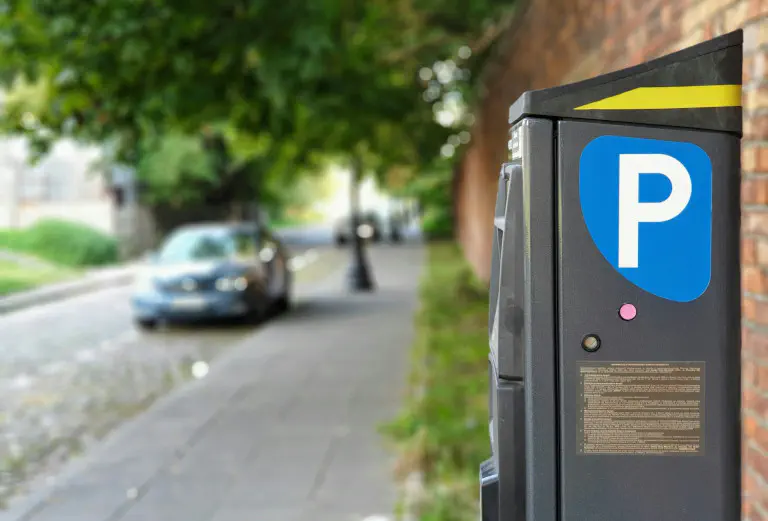
Every driver knows them: parking discs, parking meters, and pay-and-display machines. They are symbolic of some of the classic approaches to parking management. Overall, the options can be roughly classified according to whether they are intended to increase supply or reduce demand.
Managing Demand: Parking Fees, Resident Parking, P&R Concepts #
By introducing parking fees, municipalities can reduce private motorized transport and the demand for parking in certain areas. Public transit, cycling, or walking then become more attractive, and more people use these alternative modes of transport to get into the managed zone. As a result, more (paid) parking spaces are available to the remaining vehicles, and search traffic decreases.
Dynamic pricing is also conceivable, for example with different rates depending on the time of day and the occupancy of the parking spaces. The goal here is not necessarily to maximize revenue, but to manage scarce parking space according to actual demand.
To relieve businesses and residents in areas with managed parking, municipalities can create special arrangements such as loading zones or the aforementioned resident parking. However, the number of permits issued should not exceed the number of parking spaces actually available. To weaken the incentive for multiple vehicles per household, some municipalities also charge hefty fees for resident parking permits.
Park-and-ride concepts can also play an important role in keeping part of the private motorized transport out of cities. Easily accessible P&R lots on the outskirts can help ensure that drivers from out of town do not drive all the way into densely populated city centers, where parking is scarce, but instead switch to public transit for the last few kilometers. For P&R offerings to work, however, they must be more attractive and cheaper than parking in the city. In other words, they should allow for quick access via highways and an uncomplicated transfer to frequent public transit services.
Managing Supply: Underground Garages, Neighborhood Garages, Short-Term Parking #
Managing demand alone does not solve the parking shortage. That is why municipalities should always link parking management with the structural development of a neighborhood. In new construction projects, underground garages can help shift parked vehicles from public streets onto private property. This usually requires adjustments to the parking requirements in the zoning plan. Modern parking space management should not look at individual buildings in isolation, but should also consider promoting shared neighborhood garages.
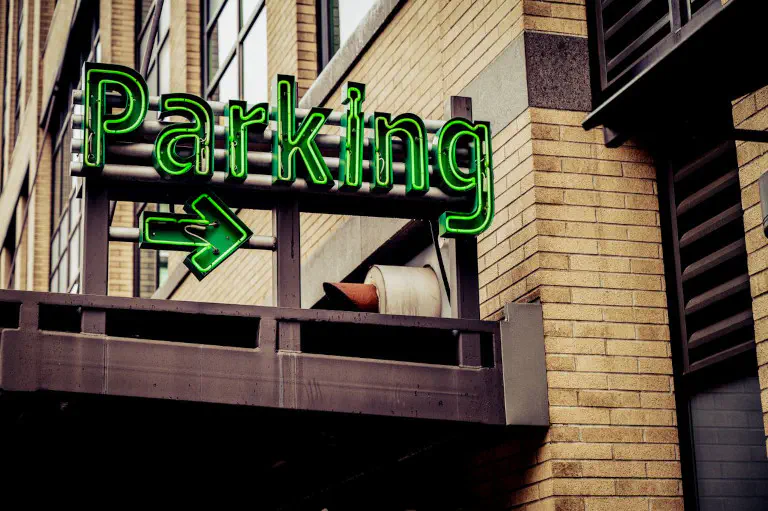
Since new parking space is rarely created in densely built-up city centers, municipalities in high-traffic areas try to cope with demand by reducing the maximum parking duration (usually between 15 minutes and 2 hours). As spaces become free more often and turnover improves – i.e., the number of parking events per space increases – more cars can enter the managed zone with the same supply of parking, and parking pressure decreases. This concept is known as short-term parking and is popular near train stations, administrative centers, and shopping districts. It can be either paid or free of charge. Depending on the setup, parking meters, pay-and-display machines, or parking discs can be used.
Enforcement of Parking Rules #
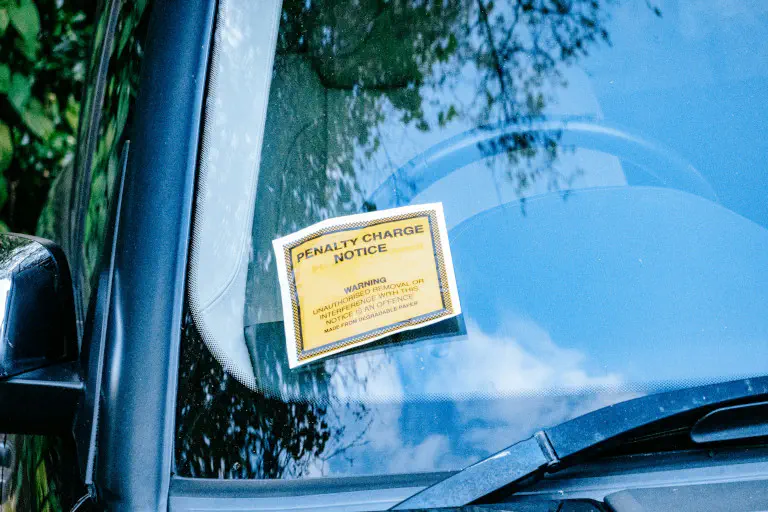
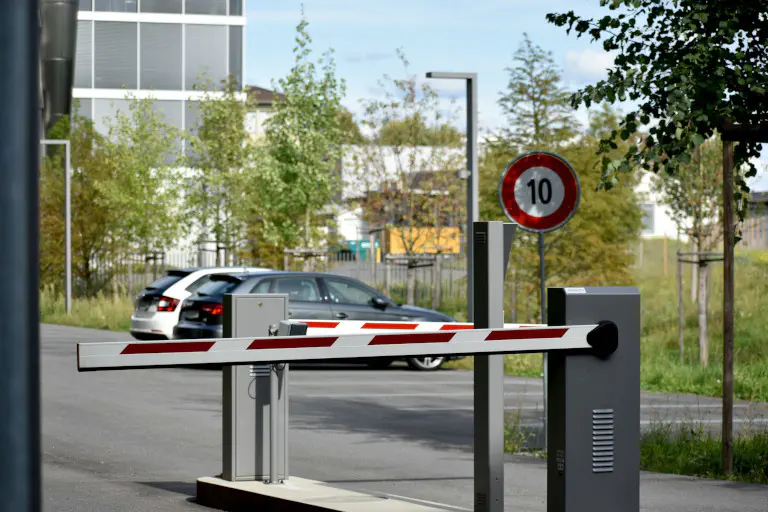
To ensure compliance with parking rules and secure revenue from parking fees, monitoring managed parking areas and sanctioning violations is essential. However, the cost of enforcement reduces the yield, which is why monitoring should be as efficient as possible. While off-street parking facilities usually rely on a barrier system or a digital parking system with automatic license plate recognition, municipalities still mostly deploy public sector staff to monitor parked vehicles on the street.
How Modern Parking Management Can Relieve Municipalities #
Up-to-date data forms an essential basis for forward-looking parking management. Instead of looking solely at the number of existing parking spaces, municipalities can, for example, record actual occupancy, average parking duration, and the origin of vehicles. This creates the basis for strategic parking management that does not react too late to overloads but recognizes and steers developments at an early stage.
Sensor-Based Parking and Real-Time Traffic Control #
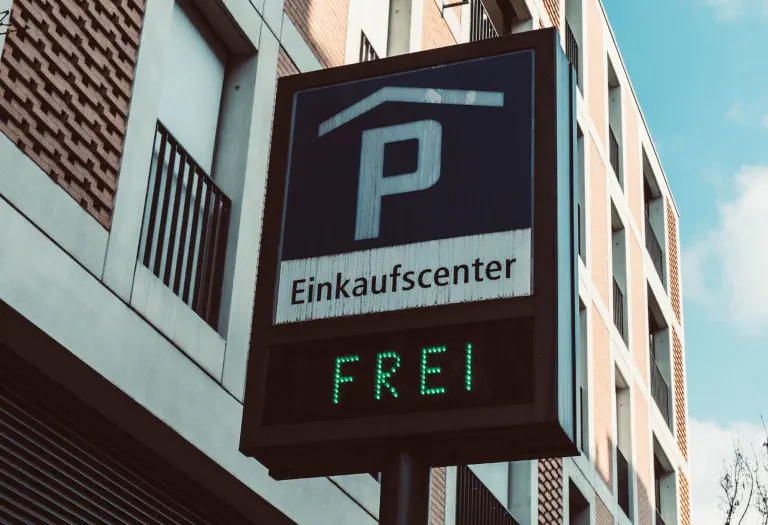
In sensor-based parking, ground sensors, cameras, or other detection technologies provide up-to-date data on the occupancy of parking spaces, e.g., in parking garages. Information on whether a parking facility is full or how many spaces are available is forwarded to navigation systems and digital information boards on site. These guidance and information systems direct search traffic to free parking spaces in real time, shortening the search for parking and making more efficient use of the available space.
For the municipality, the data also provides a much more accurate picture of the parking situation than spot surveys. This makes it possible to analyze occupancy patterns over longer periods and optimize parking more precisely. For example, municipalities can identify whether a parking zone is permanently overloaded or whether high occupancy only occurs at certain times.
Digital Parking Enforcement #
Advanced technologies also open up new possibilities for digital parking enforcement. Above all, automatic license plate recognition can greatly reduce the staff required for checks and make information available centrally in digital systems. For off-street parking (e.g., in parking garages), this works with stationary cameras that scan vehicle license plates on entry and exit and record the exact parking duration. Users can then pay the parking fees directly digitally.
To monitor on-street parking across the board, many European cities already use special vehicles known as scan cars, which drive through the streets and record the license plates of parked vehicles. The system compares the license plates in real time with a database of parking tickets, resident parking permits, or maximum parking times. If the time limit is exceeded or there is no parking authorization, a violation is documented and fine proceedings are initiated automatically. Otherwise, the license plate data is simply deleted again. It is important to ensure a legally compliant design in accordance with the General Data Protection Regulation (GDPR) and the respective municipal regulations.
Data-Driven Parking Management as Part of Your Smart City #
For effective parking management, you first need clear structures. This includes clearly defined parking facilities with understandable on-site signage, digital administrative processes in the responsible authorities, and up-to-date information on parking spaces and usage rights. Instead of managing parking tickets, resident parking permits, and parking zones through different analog processes, you should digitize the data and consolidate it centrally. This makes it easier to evaluate parking pressure in specific areas and lays the foundation for strategic parking management. Municipalities and policymakers can also better understand which parking spaces are particularly heavily used and where adjustments to management might make sense.
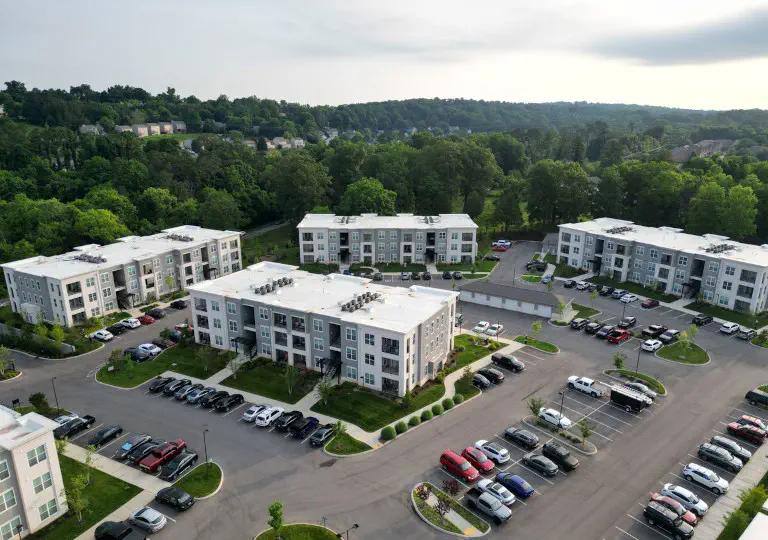
Modern parking management considers parking occupancy, alternative mobility options, and trends in vehicle numbers together. The decisive question is no longer just how many parking spaces a city has, but how intelligently it manages the available space, steers traffic, and reconciles different interests. Especially in densely populated neighborhoods, sustainable parking management must coordinate different usage demands – from cyclists and pedestrians to private motorized and delivery traffic, outdoor dining, and green spaces.
Digitalization opens up the possibility of linking parking management with other areas of urban development. Data on traffic flows, parking duration, and vehicle numbers allow conclusions to be drawn about where new parking spaces should be created or where search traffic can be better managed. Parking garages and neighborhood garages can be used more effectively when their capacities are visible. Last but not least, municipalities can model the effects of removing parking areas in favor of other uses or of creating alternative offerings (for example in public transit, car sharing, or cycling). In this way, data-driven parking management underpins the mobility strategy of your smart city and helps to justify political decisions more convincingly.
Mastering Digital Parking Management With SeaTable #
For digital administrative processes , you need a powerful, user-friendly database. This is where SeaTable comes in. With this AI no-code database , you can, for example, issue and store resident parking permits digitally after citizens have submitted an application via a form. Field staff can then check directly via an app whether a license plate has a parking authorization. SeaTable also lays the foundation for automated checks by scan car, which can immediately query the recorded license plates in the database.
For comprehensive parking management, you can use SeaTable to evaluate parking zones, for example by comparing the vehicle stock of residents and the volume of non-resident traffic with the supply of public parking spaces and privately owned parking capacity. This gives you a structured overview and allows you to derive recommendations for action in parking management.
SeaTable Cloud is hosted in secure German data centers in compliance with the GDPR, making it ideally suited to the high data protection requirements of the public sector. In addition, municipalities can retain full data sovereignty by running SeaTable Server on their own infrastructure .
Conclusion: From Parking Management to Parking Control #
The challenges of parking management cannot be solved with a single instrument. Resident parking can protect residents’ parking spaces, but it does nothing to change the overload caused by rising vehicle numbers. Parking fees can manage demand, and sensors provide valuable data for digital guidance systems, but neither creates new parking spaces.
Depending on the municipality, only a combination of different concepts therefore promises lasting success: more neighborhood and underground garages as well as P&R facilities; intelligent traffic guidance systems that reduce search traffic; resident parking permits for residential areas with many non-resident parkers; dynamic fee models and short-term parking in high-traffic locations. Digital parking enforcement with automatic license plate recognition can relieve municipalities by reducing the staff required for checks.
Frequently Asked Questions About Parking Management #
Why is a resident parking permit often not enough to find a parking space?
What is sensor-based parking?
How can cities effectively keep non-resident parkers out of residential areas?
How does parking management differ from parking space management?
TAGS: Public Sector Fleet Management Data Management & Visualisation