Table of Contents
This script automatically creates recurring monthly entries in a table. It uses an SQL query to check whether entries for the current month already exist and only creates missing ones. This way you can set it up as a scheduled automation (e.g. on the 1st of each month) without creating duplicates.
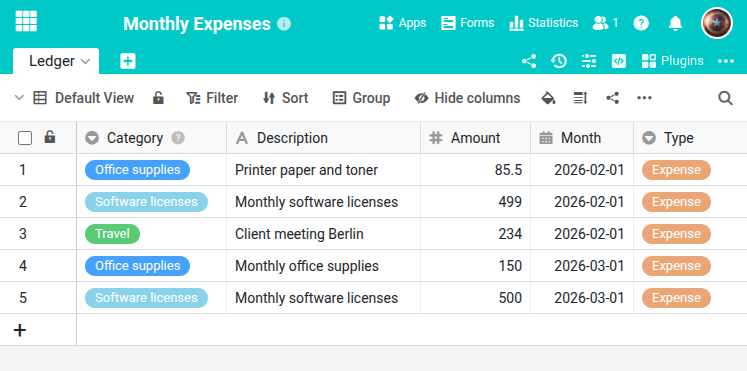
Prerequisites
The table requires at least the following columns:
- Category (Single select) — type of entry
- Description (Text) — description
- Amount (Number) — amount
- Month (Date) — billing month
- Type (Single select) — e.g. Expense or Income
The script
Adjust TABLE_NAME and the entries in ENTRIES to match your table structure. Values for single-select columns are automatically created as new options if they do not yet exist.
from seatable_api import Base, context, dateutils
from datetime import datetime

base = Base(context.api_token, context.server_url)
base.auth()

TABLE_NAME = "Ledger"

today = datetime.today()
this_month = today.month
this_year = today.year
first_of_this_month = dateutils.date(this_year, this_month, 1)

# Define recurring monthly entries
ENTRIES = [
    {"Category": "Office supplies", "Description": "Monthly office supplies", "Amount": 150.00, "Type": "Expense"},
    {"Category": "Software licenses", "Description": "Monthly software licenses", "Amount": 500.00, "Type": "Expense"},
]

for entry in ENTRIES:
    rows = base.query(f"SELECT _id FROM `{TABLE_NAME}` WHERE `Month` = '{first_of_this_month}' AND `Category` = '{entry['Category']}'")
    if len(rows) == 0:
        entry['Month'] = first_of_this_month
        base.append_row(TABLE_NAME, entry)
        print(f"Added: {entry['Category']}")
    else:
        print(f"Skipped (already exists): {entry['Category']}")
For the complete function reference, visit the SeaTable Developer Manual .