What would you do if the power and water supply suddenly failed across the board? In Europe, this is very unlikely, but in other parts of the world, damage to infrastructure is more common. Many people are not sufficiently prepared for such and other emergency situations.
That is why it is advisable to make optimal provisions for the worst-case scenario in order to ensure basic supplies for yourself and your loved ones. An emergency stockpile containing everyday necessities such as water, food, hygiene products and medicines can help. Here you can find out everything you need to know about stockpiling emergency supplies.
This is why an emergency stockpile makes sense #
What it can mean to have to fall back on emergency supplies is something we have known at least since the Corona pandemic. Fearing that people would not be able to leave their homes for a long time or that urgently needed goods would no longer be available, large quantities of food, drinks and toilet paper were hoarded. This shows: When a crisis occurs, supermarkets are quickly emptied. Apart from the specific emergency situation, stockpiling food has the advantage of being independent of store opening hours and supply chains.
Here’s what you should look for when choosing foods #
Even with everyday meals, it is usually difficult to please everyone. The same applies to the choice of food for emergencies. Especially if you are stocking up on emergency food for several people, you should consider the eating habits of each individual. Likewise, you need to plan for allergies and intolerances, as well as special food for small children or pets. Don’t buy unfamiliar foods that may not taste good to anyone in an emergency. Rely on food you like to eat and can turn into varied dishes.
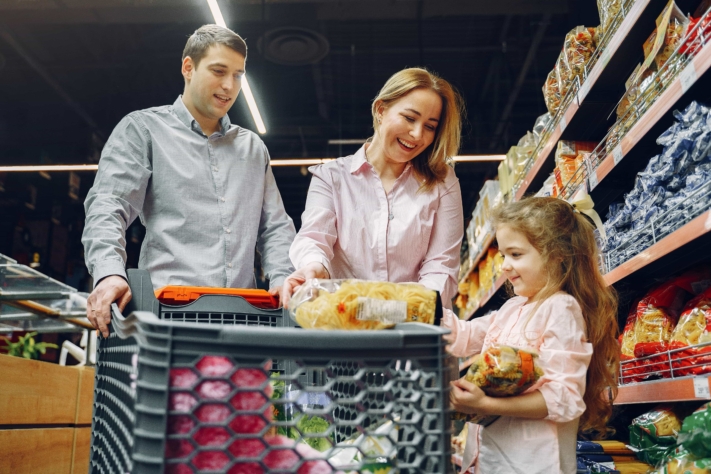
A shared shopping list helps you buy only food that will actually be eaten.
Food rich in nutrients and calories #
Make sure that your diet does not become too one-sided and pay attention to a sufficient nutrient intake. This consists of carbohydrates, fats, proteins, vitamins and minerals, which provide the body with energy. In addition, the calorie requirement should be covered. Since this is different for each person, whether due to age or physical activity, you should determine it beforehand. Online calorie calculators are available for this purpose.
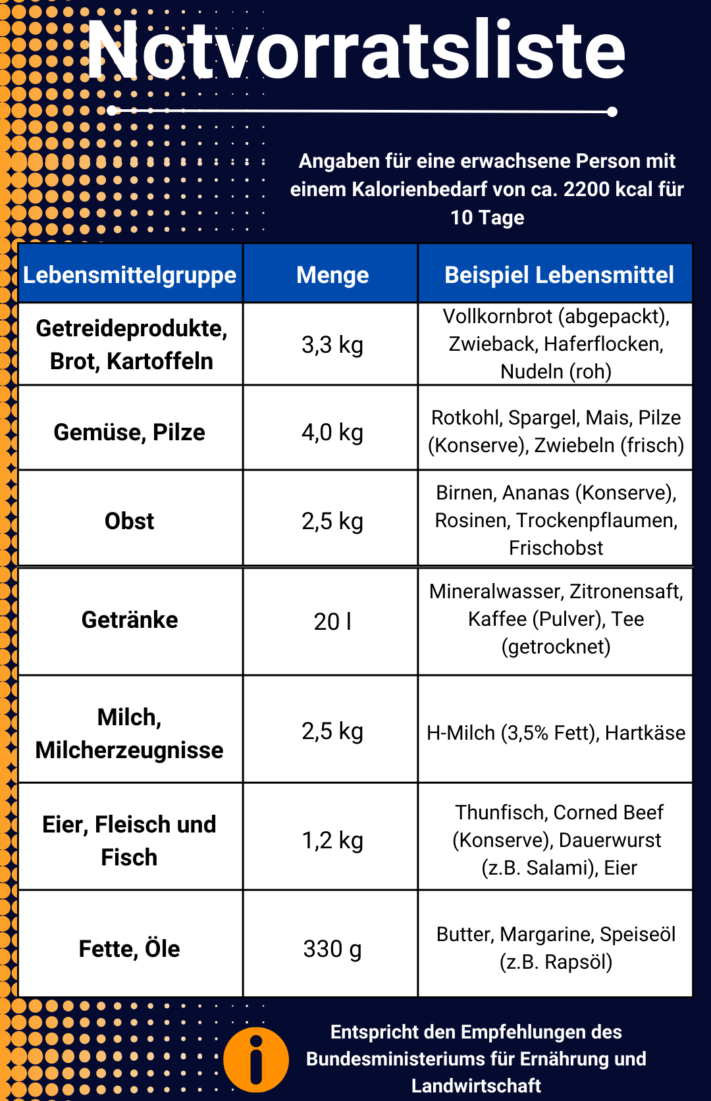
As you can see, a balanced emergency supply includes many foods that are rich in calories and nutrients. Foods that are packed airtight, contain little water and do not need to be refrigerated are particularly suitable for this purpose. In addition, a wide variety of canned fruits, vegetables, fish and meat is available. Dairy products don’t have as long a shelf life, but they are a source of protein, vitamin D and calcium, especially for vegetarians. Of course, it doesn’t have to be all healthy food. Even rather unhealthy foods such as chocolate, cookies or chips contain calories and serve as comfort food in times of crisis.
Water is the most important food #
In addition to food, you must drink enough fluids. Without food a person can survive up to three months, without water less than a week. Therefore, you should always have enough drinks in the house. On average, the government recommends two liters of fluid per person per day. In addition to mineral water, fruit juices and soft drinks are also suitable for storage, as their high sugar content and carbonation have a preservative effect.
By the way, you need not only drinking water, but also non-drinking water for cooking and cleaning. In an emergency, it is recommended to collect water in large containers, such as buckets or the bathtub, as long as the water supply is still available. If you have a garden or access to a rain gutter, you can even collect rainwater.
Properly store emergency supplies for longer shelf life #
So that you do not have to rebuild your stock from scratch again and again, you should primarily focus on long-lasting foods when buying. However, there are also a few simple tricks to make your favorite home-cooked dishes last longer. You can either freeze them (in case of a blackout, you will have to eat them first) or you can preserve them by canning. But beware: there is a lot to consider when canning. With the help of instructions, you’ll succeed on your first try. By storing food in airtight packaging in a cool, dry and dark place, you increase its shelf life.
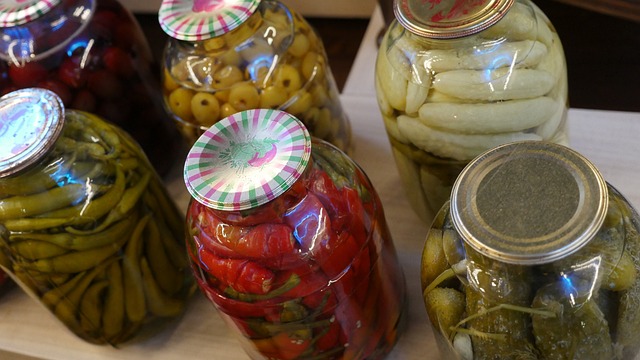
Another way to preserve food is to pickle it. Learn more about meal prep here.
The “living stock” principle #
To prevent stored food from exceeding its best-before date and becoming inedible in an emergency, you can also work with a “living stock.” In doing so, you incorporate the stored food into your daily use and buy replacements. That way, nothing goes to waste. Be sure to always place newly purchased foods at the back of the shelf so you use up the older ones first. With an online planner for your stockpiling, you always keep track of which foods should be used up next.
Save wisely on discount promotions #
Build up your stock step by step. It is not necessary to buy everything at once. When shopping, get in the habit of taking one more package of shelf-stable food than you otherwise would. Of course, you can also take advantage of discount promotions and buy larger quantities. This way, you’ll save money while being optimally prepared for anything. Nevertheless, make sure that you only buy what your family actually eats.
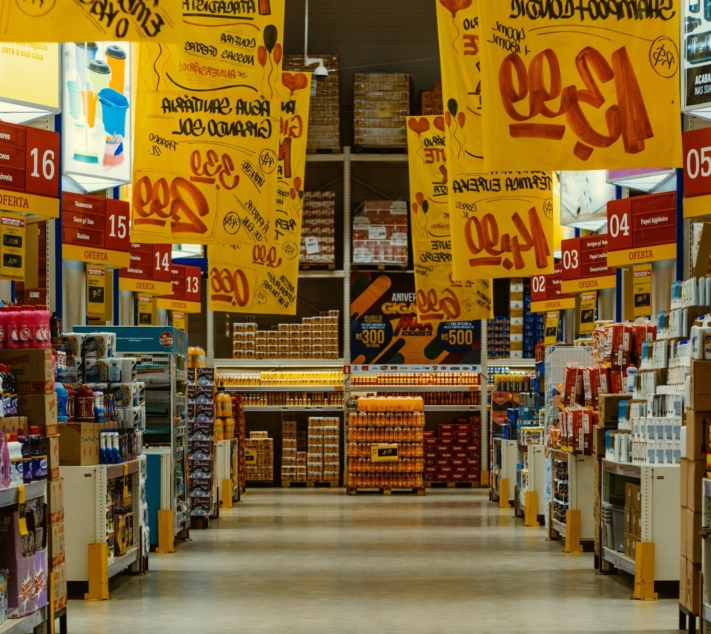
Take advantage of discount promotions on food, hygiene items and other useful goods.
What else you need in your emergency supply #
Now you’ve got a rough idea of what to look for when preparing your supplies. Besides food and drinks, however, you need other equipment to be prepared for any inconvenience. Here you will find a small selection. In general, it makes sense to have camping equipment on hand, as it is ideally suited to emergency situations in which you have to leave your home. Of course, you do not have to prepare like a prepper, basic equipment is quite enough.
For a power outage #
- It may not happen often, but if the power goes out for a long time, fresh food will spoil quickly. To still be able to cook it, you should always have an alternative way to cook ready. A gas stove or a non-electric grill is ideal for this.
- In addition, a supply of candles and flashlights is essential so you don’t have to sit in the dark at night.
- To always be reachable, you should have charged batteries for your mobile devices on hand. With solar-powered power banks and charging stations, you can supply your electronic devices with energy even without electricity from the wall socket.
For the medicine cabinet #
Something you should always have at home is a medicine cabinet. Especially in times of uncertainty, it helps you not to panic over every little injury or illness. It should contain:
- Prescription medications
- Remedies for colds, pain and fever
- Remedies for diarrhea, nausea and vomiting
- Wound ointments, sunscreen, mosquito and tick spray
- Fever thermometer, tweezers, scissors
- Disinfectant and bandages
For cleanliness #
In order to keep yourself and your home clean, it is recommended that you also stock up on hygiene items. These include:
- Cleaning agents and detergents, stain removers
- Soap, toothpaste, shampoo
- Wet wipes and toilet paper
Of course, water for washing should not be missing. To make it last longer, you can use water purification products.
Online planner for your emergency stock #
So that you are ideally prepared for the next emergency situation, the SeaTable team has created a template for your emergency supplies. You can adapt it to your needs as you wish.
If you want to use SeaTable for stockpiling, just register for free.
TAGS: Everyday Life & Leisure