
What is a gratitude journal? #
A gratitude journal is a special form of the mindfulness journal. Its purpose is to direct your attention toward recognizing and capturing beautiful moments and positive facets, whereas a mindfulness journal generally lets you observe your thoughts, emotions, and experiences in the here and now. The two go hand in hand: in order to be grateful for something, you first have to learn through mindfulness to consciously perceive the positive things in everyday life.
What is the difference from a happiness journal? #
The terms are often used synonymously, but the gratitude journal goes one step further. It is not only a method for making inconspicuous happiness visible, but also for consciously developing appreciation for it.
Gratitude journal: benefits at a glance #
- Adopt a positive perspective: With a gratitude journal, you shift your gaze away from problems, worries, and fears and turn instead toward positive aspects.
- Strengthen self-confidence: When you write down what is going well, you begin to see your happiness and your successes. This can strengthen your self-confidence, your contentment, and your resilience.
- Reduce your sense of stress: By learning gratitude, you generate positive emotions and become less susceptible to negative stress. This helps you move through everyday life more calmly.
- Better sleep: If you write in your gratitude journal in the evening before falling asleep, you stop the mental merry-go-round and end the day on a positive note.
- Get through hard times: Especially in difficult phases, it is easy to lose faith in the good. If you nevertheless focus on the bright spots, this can give you strength and confidence.

The negativity bias: how distorted perception blocks positive thinking #
You surely know the feeling: your day went largely well, yet at dinner you talk about that one unpleasant comment from your boss and the one task on your to-do list that you didn’t manage to finish. This phenomenon is called the negativity bias. It refers to the human tendency to perceive negative events, news, or emotions more strongly and to weight them more heavily than positive ones, even though the good actually outweighs the bad.
It gets even worse when you have a negative experience early in the morning, for example missing the bus and arriving late for an appointment. Then you get the feeling that everything is going wrong. And once you start thinking that way, you chalk up everything that goes wrong that day to your streak of bad luck. A filter settles over your perception and lets only the negative through. You don’t notice the positive things at all, even though they are probably happening too.
Why our brain has to learn gratitude #
Our brain is evolutionarily programmed to perceive dangers more quickly and remember them longer than positive circumstances. The bush with juicy berries fades into the background when the brain simultaneously registers sharp thorns, a steep drop, or lurking predators. What once ensured our survival, however, means that today stress factors, worries, and problems receive a disproportionate amount of attention.
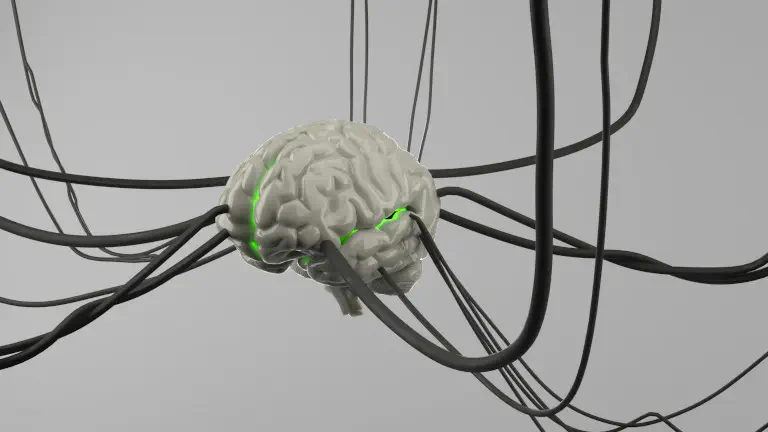
Because of the negativity bias, we naturally perceive the negative more strongly than the positive. We focus on what bothers us or what is missing, while beautiful moments pass us by without a trace. This is exactly where a gratitude journal comes in. It sharpens our eye for what is already working well, in order to break through negative thought patterns and be happier in the long run.
Positive Psychology: the concept behind the gratitude journal #
In contrast to Clinical Psychology, which is mostly deficit-oriented, Positive Psychology works in a resource-oriented way and places aspects such as personal character strengths, happiness factors, and resilience at the center of its research. A central concept here is neuroplasticity: our brain has the ability to adapt to changes throughout our entire life. Every time you learn something new, your nerve cells form new connections.
That means: when you regularly repeat certain patterns of thinking and behavior, you strengthen neural networks in specific brain regions. Anyone who primarily perceives stress and problems unconsciously reinforces precisely that perception. If, on the other hand, you regularly adopt different perspectives and learn gratitude, you strengthen the corresponding neural networks for positive thinking.
How a gratitude journal can strengthen your mental health #
Through mindfulness methods such as a gratitude or happiness journal, you can sharpen your eye for the positive and feel more appreciation for everyday things. This goes hand in hand with greater contentment – after all, gratitude counteracts our tendency to primarily perceive what is going badly. It helps you highlight positive sides even in exhausting phases and see what is already good. There are, in fact, more of these things than we are often aware of.
Studies that have examined the happiness journal as a psychological method also found positive effects on the well-being, motivation, and life satisfaction of those who wrote down every day what they were grateful for. It has not yet been conclusively established exactly how the gratitude journal produces its effect. On the one hand, it can boost self-confidence because you train yourself to recognize positive aspects and become aware of your successes as well as strong social relationships.

On the other hand, it is plausible that problems, worries, and fears recede into the background for a moment when you reflect on positive experiences – because you cannot be grateful and feel fear, anger, or tension at the same time. A gratitude journal can therefore promote emotional balance and reduce susceptibility to stress and depressive moods.
Potential effects at a glance #
- More mindfulness in everyday life and appreciation for the little things in life
- Greater contentment and a more positive outlook on life
- More motivation and well-being
- A lower sense of stress and emotional balance
- Stronger resilience and calm through greater self-confidence
- A healthier lifestyle through reflection: sleep, nutrition , etc.
Tips for the perfect routine when keeping a gratitude journal #
-
Set a fixed time: Like every new habit , a gratitude journal thrives on regularity. As a morning routine, it is ideal for starting the day with a positive impulse. In the evening, writing helps you wrap up the day and find inner peace. You can also tie it to an existing routine, for example by always reflecting on what you are grateful for while brushing your teeth.
-
Note only positive thoughts: Unresolved tasks, conflicts, or problems – sometimes the mental merry-go-round seems to spin endlessly. To truly pause and create emotional balance, you should record only positive thoughts, moments of happiness, and beautiful memories in your gratitude journal. You can get your worries, to-dos, and appointments off your chest beforehand, for example in a bullet journal .
-
Look more closely and be specific: When you keep a gratitude journal every day, you can quickly get the impression that you are always writing the same thing. After all, you could, for example, be grateful for your health, your job, or your family on an ongoing basis. So try to notice smaller things too and describe them specifically. Then you might notice the string of green traffic lights on your way to work or the friendly cashier at the supermarket.
-
Keep it up on bad days: It is precisely on crushing days that a gratitude journal can have the greatest effect. That doesn’t mean you should ignore negative feelings, but rather that you can still discover small bright spots. If you are under stress, for example, you can still be grateful for a friend’s help or a walk in the fresh air. This differentiated perception strengthens your resilience more sustainably than suppressing the negative aspects.
Keeping a gratitude journal: the best questions to get started #
What you write about is, of course, up to you. With the following questions, getting started with your very own happiness journal is easy in any case:
- What went well today?
- What did I enjoy today?
- What made me feel good today?
- What am I grateful for today?
- Whom would I like to thank today?
- What am I looking forward to tomorrow?

It’s not about spectacular events. With a mindfulness journal, you try to notice the many small moments in which you can count yourself lucky, for example:
- a relaxed walk in the sun
- a clear road where there is usually a traffic jam
- a joke that made you laugh
- a task you successfully completed
- food and drinks that you enjoyed
- a photo with a beautiful memory
Typical mistakes when keeping a gratitude journal #
- Expectations that are too high: A gratitude journal won’t change your life overnight. The positive effects only emerge through regular repetition over the course of weeks.
- Not writing often enough: Writing in your gratitude journal for five minutes every day is far more effective than setting aside an hour for it every two weeks.
- Wording that is too general: Try to describe moments for which you are grateful as specifically as possible, instead of vague sentences like: “I am grateful for my family.”
- Misguided perfectionism: A gratitude journal doesn’t need to become a novel; short bullet points are perfectly sufficient. What matters more is sticking with it at all during stressful phases.
How to create your own digital gratitude journal with SeaTable #
SeaTable is an AI no-code platform that lets you capture data, text, and images in a structured way and easily build your own applications. You can flexibly adapt our gratitude journal template to your needs without any programming knowledge and use it free of charge forever.
Discover the integrated gratitude journal app as well: using a form, you systematically answer questions so that your journal entries come together quickly. Your entries are then clearly visualized on various pages, in a table or photo gallery, as well as on a calendar or dashboard.
Your digital gratitude journal is securely stored in the SeaTable Cloud and available anytime over the internet, regardless of location or device. This way, you can capture your positive experiences directly wherever you are, without having to carry an analog gratitude journal with you.
Conclusion: Establishing positive thought patterns with a gratitude journal #
A gratitude journal combines insights from Positive Psychology with everyday-friendly journaling to counter the negativity bias. It offers an easy entry point to more mindfulness and mental health by focusing on what is going well. By deliberately perceiving successes, moments of happiness, and positive aspects, it breaks up negative thought patterns and can strengthen self-confidence, resilience, and well-being in the long term.
Frequently asked questions about the gratitude journal #
Can a gratitude journal replace therapy?
Do I need a special gratitude journal?
Why do most attempts to keep a gratitude journal long-term fail?
How can you keep up the gratitude journal even on really bad days?
TAGS: Everyday Life & Leisure